Signage
Signage in Jaipur: How to Choose the Right Signage for Your Business
A practical guide to business signage in Jaipur: sign types, how to match them to your location and budget, and what to include in a brief.
6 min read
Signage
By iMad6 min read
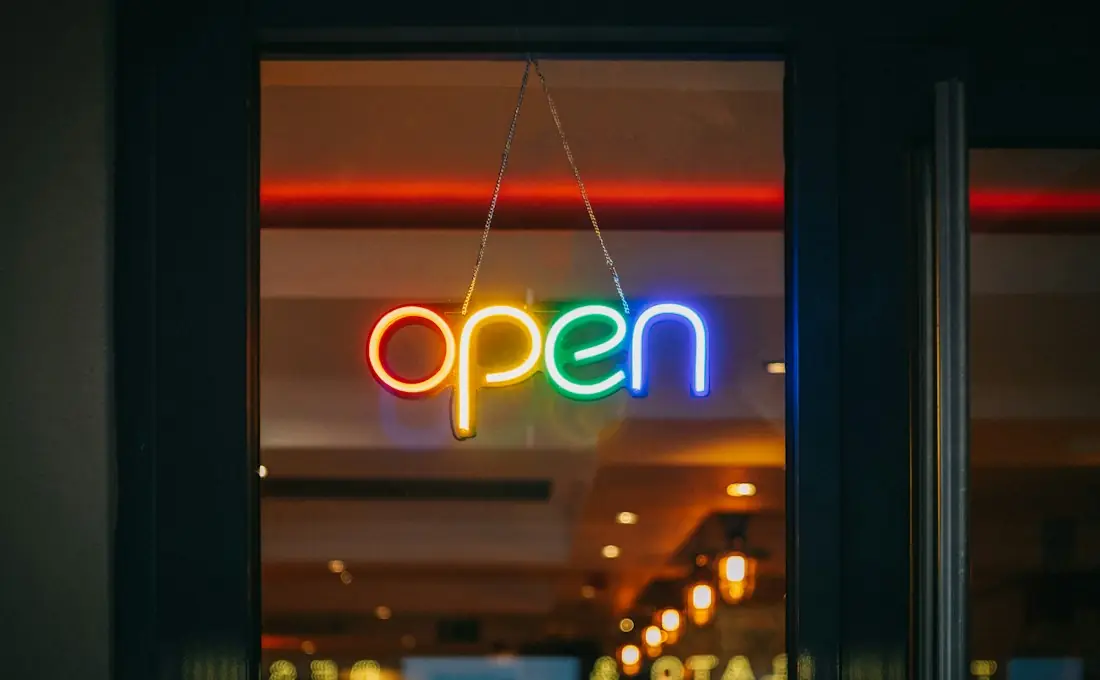
An LED sign board is a sign lit by light-emitting diodes, so the name or logo stays clearly visible at night and in dim light. LEDs are popular because they are compact and flexible, which allows them to be built into letters, panels and light boxes of many shapes. This guide covers the main types, the materials around the LEDs and what to consider before you order.
The LEDs are the light source. The sign itself is the structure and surface around them: letters, a panel or a box that shapes and diffuses the light. The same LED technology can therefore appear as bold glowing letters, a softly lit panel or a thin outline, depending on how the sign is built.
Compared with older lighting such as tube lights, LEDs are generally more compact and efficient, and they allow slimmer sign designs. Whether a sign looks good depends largely on design, build quality and the choice of surface materials, not just the LEDs themselves.
Channel letters are individual three-dimensional letters or logos with a hollow body, fitted with LEDs inside. The face can be acrylic and the sides metal, so the letter glows evenly. Some designs use an epoxy-resin finish on the face to give a smooth, glossy and slightly domed look. Channel letters are a common choice for shopfronts, showrooms and corporate buildings.
In an edge-lit sign, LEDs are placed along the edge of a clear panel, usually acrylic, and the light travels through the material to illuminate engraved or cut details. The result is a clean, modern look with a thin profile. These suit reception areas, interiors and premium branding where a refined appearance matters.
A backlit board has LEDs behind a translucent face, so the whole surface or the printed graphics glow evenly. Light boxes are the box-shaped version, often with a changeable printed face. They are useful for menus, department names, hanging signs and shopfronts that need clear, easy-to-read lighting.
Neon-style signs use flexible LED strips shaped into lettering or graphics, giving the glowing-tube look without traditional glass tubes. They work well for cafes, salons, creative studios and feature walls, where mood and personality are part of the design.
Outdoor LED screens display changing messages, images or video. They suit high-footfall locations and promotions that change often. Because they are more technical than a fixed sign, they need careful planning around power, mounting, weather protection and viewing angle.
These terms describe where the light falls, and they change the character of a sign.
The surface and structure around the LEDs influence both appearance and durability. Our guide on how to choose the right signage material covers these in more depth. In brief:
For a broader look at signage options across business types, see our overview of signage in Jaipur.
An LED sign that looks striking at night can be hard to read in strong daylight if the design relies only on glow. Jaipur has bright sun for much of the year, so lettering needs good contrast against the background, not just illumination. Solid, high-contrast colours and well-chosen faces help a sign read well in both conditions.
Think about when your customers see the sign. A restaurant or showroom visited mainly in the evening can lean towards glow effects. A clinic or shop used throughout the day needs strong daytime legibility as well.
Any lit sign involves electrical work, so safety deserves attention from the start. Wiring should be properly insulated, concealed and fixed by competent people, and the sign should be built to suit the local electrical supply and your premises.
Weather matters just as much. Jaipur's monsoon brings heavy rain, so joints, openings and power connections need protection from water getting in. Ask how the sign is sealed and where the power supply is placed. Dust is also common, so access for cleaning and servicing is worth planning.
LEDs generally use less power than older lighting, and they are typically long-lasting, but they are not maintenance-free. Power supplies and connections can fail, and dust and dirt dull the glow. A sign that can be opened or serviced easily is easier to keep looking good over time.
With so many formats available, it helps to match the sign to the job. Channel letters suit a business that wants its name to stand out from the street. Edge-lit acrylic suits a calm, premium interior. Backlit boards are practical when you need a large, evenly lit face with printed graphics, and neon-style signs add character where mood matters more than distance visibility.
Also consider the wall or surface behind the sign. A dark, plain wall shows halo lighting well, while a busy or reflective surface can reduce its effect. Colour matters too: lighter tones usually glow more clearly, but they must still contrast with the background in daylight. A good supplier will test these choices against photos of your actual frontage before you commit.
iMad's signage services include LED signages, LED channel letters, LED laser edge-lit signs and neon signages, and we can help you compare options for your site. If your signage is part of a larger outdoor presence, our outdoor branding services may also be relevant. When you are ready, contact us with photos of your space and a short description of what you want.
Channel letters are individual raised letters or logos, each lit from inside, so the shape of the brand glows. A light box is a box-shaped sign with a translucent face lit from behind, so the whole panel glows. Channel letters feel more dimensional; light boxes are often simpler and easier to change.
Yes, if they are built for outdoor use. Strong sun, monsoon rain and dust all affect signs, so ask how the unit is sealed, how power connections are protected and how easily it can be serviced. Good construction matters as much as the LEDs themselves.
Halo-lit channel letters in stainless steel or brass, or edge-lit acrylic for interiors, are often chosen for a refined look. The best choice depends on your building, brand style and viewing distance, so it helps to see options against photos of your actual space.
They need less than older lighting, but not none. Dust build-up, loose connections or a failed power supply can affect performance. Choose a design that allows access for cleaning and servicing, and have any electrical checks done by competent people.
Signage
A practical guide to business signage in Jaipur: sign types, how to match them to your location and budget, and what to include in a brief.
6 min read
Signage
A decision framework for picking signage material, with a plain-language comparison of the common options and what to ask a supplier.
6 min read
Signage
Understand how indoor and outdoor signs differ in exposure, materials and installation, and which suits each part of your premises.
5 min read
Tell iMad what you need and where, and we will suggest the right approach.