
Signage
Indoor vs Outdoor Signage: Materials, Durability and Best Use Cases
Understand how indoor and outdoor signs differ in exposure, materials and installation, and which suits each part of your premises.
5 min read
Outdoor
By iMad7 min read
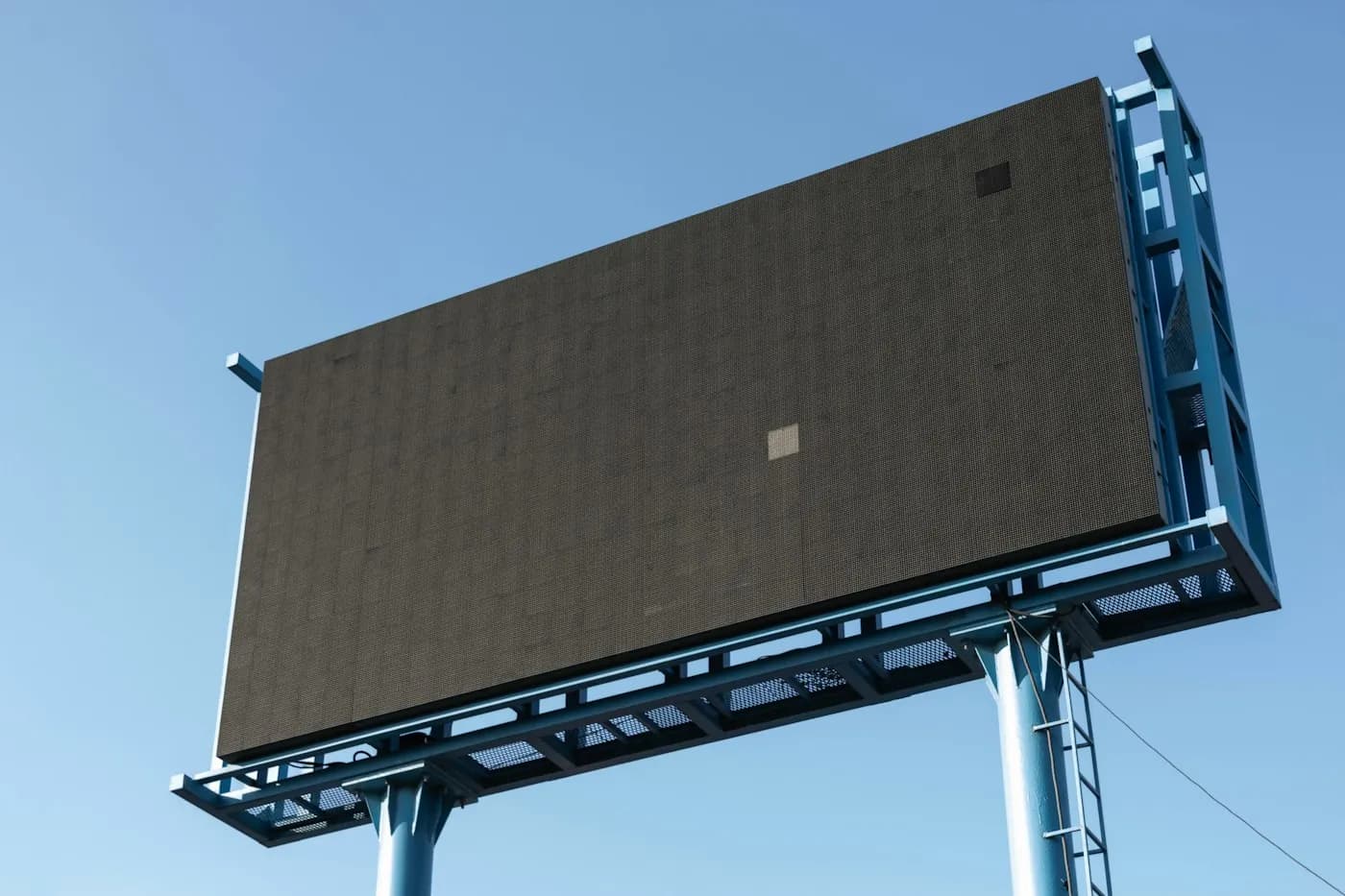
Outdoor branding means placing your brand where people already are: on roads, buildings, malls and vehicles. It works because it is always on and impossible to scroll past. The key is choosing the right format for your goal and designing it to be read quickly from a distance.
Outdoor branding covers every brand display that sits in public or semi-public space. Some are large and aimed at passing traffic, such as hoardings. Others are close to the customer, such as a shopfront board or a mall display.
Outdoor branding generally plays three roles:
A business may need all three roles, but usually one matters most at a given time. A new shop needs direction. A regional brand launching a product may need awareness. Knowing the main job helps you decide where to spend.
The right format depends on who you want to reach and how they move. Start with the audience, then pick the format.
If your audience is drivers and riders, you need large, simple displays placed with a clear line of sight. Hoardings, unipoles and highway branding suit this. The message has only seconds to land, so it must be short and bold.
If your audience walks past or visits a market or mall, close-range displays work better: shopfront signage, wall branding near entrances and mall displays. People have more time to read, but they are also comparing you with neighbouring shops, so clarity and contrast matter.
If you want to reach several areas without fixed locations, vehicle branding on vans, buses and autos moves with the audience. It suits events, launches and local reach, and works well alongside a fixed display.
It also helps to think about repetition. A single display seen once is easy to forget, while the same brand seen at the shopfront, on a main road and on a passing vehicle starts to feel familiar. Where budget allows, a smaller number of well-placed displays that share one look usually does more than many scattered ones that do not match.
Outdoor creative fails most often because it says too much. Think of it as a message read in a glance.
Lighting is another consideration. A display seen mainly after dark, such as a highway stop or a market frontage in the evening, needs lit lettering or reflective treatment so it does not disappear at night. A display seen mostly in daylight can rely on colour and contrast alone. Ask when your audience will actually see the display, and design for that time.
Outdoor branding faces sun, dust and rain every day. Jaipur has hot, dry summers with strong sun, a monsoon season and frequent dust, and each affects materials differently.
Materials are typically chosen based on location, exposure and how long the display is meant to stay up. Temporary campaigns and permanent branding call for different choices, and a good brief says which one you need. Our guide on indoor vs outdoor signage explains how exposure changes material decisions.
Most outdoor displays, hoardings in particular, need permission before installation. This generally involves the relevant local authority and, in many cases, the owner of the wall, building or land. Rules differ by location and by type of display, and heritage areas may have their own expectations.
Check requirements for your specific site before you commit to a design or production. Raising it at the planning stage avoids rework and delays later.
Outdoor works harder when it connects to what customers see elsewhere. A hoarding that introduces your name can be supported by a shopfront that matches it, printed brochures or cards that repeat the look, and on-ground promotions that give people something to engage with.
For example, a launch might use a large outdoor display for awareness, promotional branding materials such as standees and canopies for events, and printing for flyers and catalogues. Using the same colours, logo and message keeps the pieces working as a single campaign.
A typical outdoor project moves through these stages:
Outdoor branding services at iMad cover concept and execution across these stages, including hoardings and unipoles, wall wraps, highway dhaba branding, mobile van, mall advertising and bus and auto branding.
Even a well-designed display fails if it is hidden behind trees, poles or other boards. Visit the site at different times of day and look from where your audience will actually be: a driver approaching, a pedestrian crossing, a shopper at a mall entrance. Note what blocks the view and how long a person has to read the message. This simple check often changes the size, height or position of a display before production begins.
If you are planning outdoor branding for a shop, product launch or highway presence, begin with your goal, location and audience. When you are ready to talk it through, contact iMad and we will first understand your needs, then recommend and design the right outdoor approach before it is implemented.
Outdoor branding is the display of your brand in public spaces, such as hoardings, unipoles, wall wraps, shopfront signage, mall displays and vehicles. It gives you continuous visibility, helps people find your location and builds familiarity with your name among people who pass by daily.
Choose by audience and goal. Hoardings suit awareness among road traffic and need short, bold messages. Shopfront signage suits people who are already near you and helps them find and recognise your store. Many businesses use both, with matching design.
Usually yes, especially for hoardings and large displays. Approval often involves the relevant local authority and the owner of the wall or land, and rules vary by location. Check requirements for your site early, before design and production, so you avoid delays.
It depends on materials, finishes, exposure and upkeep. Strong sun, dust and monsoon rain all wear displays, so UV-resistant inks, sealed fixings and regular cleaning matter. Ask for materials chosen for your specific location and for how long the display is meant to stay up.
Short copy, large type, strong contrast and one call to action. Viewers often have only seconds, so limit colours and avoid fine detail. Check the design at the real viewing distance before approving production, not only on a screen.
Signage
Understand how indoor and outdoor signs differ in exposure, materials and installation, and which suits each part of your premises.
5 min read
Signage
A practical guide to business signage in Jaipur: sign types, how to match them to your location and budget, and what to include in a brief.
6 min read
Promotional
Promotional branding turns physical materials such as canopies, standees and merchandise into marketing at the point of contact. Learn what to use, when and how to plan it.
6 min read
Tell iMad what you need and where, and we will suggest the right approach.